Bihar DECE LE Syllabus 2026 PDF Download: Exam Pattern, Subject-Wise Syllabus, Important Dates, Full Details in Hindi

Bihar DECE LE Syllabus 2026: बिहार में डिप्लोमा इंजीनियरिंग के दूसरे वर्ष में लेटरल एंट्री एडमिशन के लिए आयोजित Diploma Entrance Competitive Examination (Lateral Entry) – DECE (LE) 2026 का नोटिस और प्रॉस्पेक्टस BCECEB द्वारा जारी किया गया है। DECE (LE) 2026 के लिए आवेदन प्रक्रिया 20 मार्च 2026 से शुरू की गई है, और बोर्ड द्वारा इस प्रवेश परीक्षा के आधिकारिक सिलेबस और परीक्षा पैटर्न को जारी कर दिया गया है।

BiharHelp App

यदि आप 12वीं (Science) या 10वीं + 2 वर्षीय ITI के बाद सीधे Diploma Engineering के 2nd Year में प्रवेश लेना चाहते हैं, तो Bihar DECE LE 2026 आपके लिए बहुत महत्वपूर्ण परीक्षा है। इस प्रवेश परीक्षा में शामिल होने वाले सभी अभ्यर्थी को इसके परीक्षा पैटर्न और सिलेबस से परिचित होना बेहद ही आवश्यक है।

Your Trusted Source of Truth
Available As Preferred Source On

Bihar DECE LE Syllabus 2026 PDF Download

इस लेख में हमने इस प्रवेश परीक्षा के Exam Pattern, Subject-wise Syllabus, Preparation Tips, और सभी महत्वपूर्ण जानकारी को सब कुछ एक जगह व्यवस्थित रूप से बताए हुए है। यदि आप भी इस डिप्लोमा इंजीनियरिंग कोर्स में लेटरल एंट्री एडमिशन लेना चाहते है, तो आप आज के इस पोस्ट को पूरे ध्यान से अंत तक अवश्य ही पढ़ें।

Bihar DECE LE Syllabus 2026: Overview

Exam Name Diploma Entrance Competitive Examination (Lateral Entry) – DECE (LE) 2026
Conducting Body Bihar Combined Entrance Competitive Examination Board (BCECEB)
Exam Level State Level
Course Offered Diploma Engineering (Lateral Entry – 2nd Year)
Admission Session 2026–27
Registration Start Date 20 March 2026
Last Date to Apply 23 April 2026
Exam Date 24 May 2026
Official Website bceceboard.bihar.gov.in

Bihar DECE Lateral Entry Exam Pattern and Syllabus 2026

आज के इस आर्टिकल में हम आप सभी अभ्यर्थियों का हार्दिक स्वागत करते हैं, जो बिहार पॉलिटेक्निक (डिप्लोमा इंजीनियरिंग) के द्वितीय वर्ष में लेटरल एंट्री के माध्यम से एडमिशन लेना चाहते हैं। इस लेख के माध्यम से हम आपको Bihar DECE LE 2026 (Diploma Entrance Competitive Examination – Lateral Entry) के Exam Pattern और Syllabus से जुड़ी सभी महत्वपूर्ण जानकारी विस्तार से बताएंगे।

यह प्रवेश परीक्षा Bihar Combined Entrance Competitive Examination Board (BCECEB) द्वारा आयोजित की जाती है, जिसके माध्यम से बिहार के विभिन्न सरकारी एवं निजी पॉलिटेक्निक संस्थानों में सत्र 2026–27 के लिए डिप्लोमा इंजीनियरिंग के दूसरे वर्ष में दाखिला दिया जाता है।

Read Also…

अगर आप 12वीं (Science) या 10वीं + 2 वर्षीय ITI के बाद सीधे डिप्लोमा इंजीनियरिंग के सेकंड ईयर में प्रवेश लेना चाहते हैं, तो यह परीक्षा आपके लिए बेहद महत्वपूर्ण है। इस लेख में हम परीक्षा पैटर्न, विषयवार सिलेबस, महत्वपूर्ण टॉपिक्स, तैयारी रणनीति और जरूरी जानकारी को बताएंगे, ताकि आपकी तैयारी सही दिशा में हो सके। इसलिए इस पोस्ट को ध्यानपूर्वक अंत तक पढ़ें।

Bihar DECE LE 2026 Exam Pattern

Bihar DECE LE 2026 का प्रश्नपत्र Physics, Chemistry और Mathematics पर आधारित होता है। सभी उम्मीदवार इस प्रवेश परीक्षा के सिलेबस और परीक्षा पैटर्न BCECEB के आधिकारिक पोर्टल से प्राप्त कर सकते है। इस प्रवेश परीक्षा के सम्पूर्ण पैटर्न कुछ इस प्रकार है:

  • Exam Mode: Offline (OMR Based)
  • Question Type: Objective / MCQ
  • Total Questions: 150
  • Total Marks: 600
  • Duration: 2 Hours 15 Minutes
  • Marking Scheme: Correct Answer = +4 Marks
  • Negative Marking: Wrong Answer = -1 Mark
  • Unattempted Question: 0 Mark
  • Medium of Question Paper: Hindi + English
  • Syllabus Level: 10+2 Science standard
Subject No. of Questions Marks
Physics 50 200
Chemistry 50 200
Mathematics 50 200
Total 150 600

Bihar DECE LE Syllabus 2026

Bihar DECE LE Syllabus 2026 उन अभ्यर्थियों के लिए बेहद महत्वपूर्ण है, जो डिप्लोमा इंजीनियरिंग के दूसरे वर्ष में लेटरल एंट्री के माध्यम से प्रवेश लेना चाहते हैं। इस परीक्षा का आयोजन बिहार संयुक्त प्रवेश प्रतियोगिता परीक्षा पर्षद (BCECEB) द्वारा किया जाता है।

परीक्षा में मुख्य रूप से Physics, Chemistry और Mathematics विषयों से प्रश्न पूछे जाते हैं। यदि अभ्यर्थी समय रहते पूरा सिलेबस और परीक्षा पैटर्न समझ लेते हैं, तो वे अपनी तैयारी को सही दिशा में आगे बढ़ाकर बेहतर रैंक प्राप्त कर सकते हैं। नीचे में हम आपको Bihar DECE LE Syllabus 2026 से जुड़ी सभी जरूरी जानकारी बताने जा रहे हैं।

DECE LE 2026 Physics Syllabus

Physics section में कुल 50 प्रश्न पूछे जाते हैं। यह भाग concept आधारित होता है और इसमें numerical, formula application, reasoning तथा practical situation आधारित प्रश्न आ सकते हैं। Physics की तैयारी के लिए सिर्फ theory पढ़ना काफी नहीं होता; formula revision और objective practice दोनों जरूरी हैं।

Physics: Unit-wise Topics
1. Introduction and Measurement
  • Science and scientific method

  • Physics and its relation with society

  • Physical quantities and measurement

  • System of units, SI units

  • Fundamental and derived units

  • Dimensions and dimensional analysis

  • Accuracy and precision

  • Systematic and random errors

  • Standard deviation, RMS value

  • Significant figures and rounding off

2. Mathematical Tools
  • Scalar and vector quantities

  • Vector addition and subtraction

  • Unit vector, null vector

  • Scalar product and vector product

  • Differentiation and integration in Physics

  • Cartesian coordinate system

  • Graph plotting and interpretation

  • Slope, tangent, curvature

  • Maxima, minima, area under curve

3. Kinematics of Particles
  • Rectilinear motion

  • Uniform and uniformly accelerated motion

  • Freely falling bodies

  • Motion in two and three dimensions

  • Projectile motion

  • Relative velocity

  • Frame of reference

4. Force and Laws of Motion
  • Force and interaction

  • Fundamental forces of nature

  • Newton’s laws of motion

  • Momentum and impulse

  • Inertial and non-inertial frames

  • Conservation of linear momentum

  • Motion of connected bodies

  • Rocket propulsion

  • Friction, rolling friction, lubrication

  • Circular motion

  • Centripetal force and acceleration

  • Banking of roads

  • Vertical circle and conical pendulum

5. Work, Energy and Power
  • Work and kinetic energy

  • Power

  • Work-energy theorem

  • Conservative and non-conservative forces

  • Potential energy

  • Conservation of energy

  • Mass-energy equivalence

  • Elastic and inelastic collision

  • Coefficient of restitution

6. Rotation
  • Centre of mass

  • Moment of inertia

  • Radius of gyration

  • Parallel and perpendicular axis theorem

  • Torque and couple

  • Equilibrium of rigid bodies

  • Angular momentum

  • Conservation of angular momentum

  • Rolling motion

7. Gravitation
  • Universal law of gravitation

  • Inertial and gravitational mass

  • Gravitational field and potential

  • Hollow and solid sphere

  • Acceleration due to gravity and variation in g

  • Kepler’s laws

  • Satellites

8. Properties of Matter
  • Intermolecular forces

  • States of matter

  • Elasticity and Hooke’s law

  • Young’s modulus, bulk modulus, rigidity modulus

  • Surface tension and capillarity

  • Excess pressure

  • Kinetic theory of gases

  • Ideal gas law

  • Fluid dynamics

  • Viscosity and Stoke’s law

  • Bernoulli’s theorem and applications

9. Heat and Thermodynamics
  • Heat and temperature

  • Zeroth law of thermodynamics

  • Temperature scales

  • Thermometers

  • First law of thermodynamics

  • Specific heat

  • Thermodynamic processes

  • Carnot cycle

  • Second law of thermodynamics

  • Efficiency of heat engine

  • Thermal conductivity

  • Black body radiation

  • Wien’s law, Stefan’s law

  • Newton’s law of cooling

10. Oscillations
  • Periodic motion

  • Oscillatory motion

  • Simple harmonic motion

  • Energy in SHM

  • Simple pendulum

  • Damped and forced oscillations

  • Resonance

  • Composition of SHM

11. Waves and Acoustics
  • Progressive waves

  • Equation of travelling wave

  • Longitudinal and transverse waves

  • Superposition

  • Interference

  • Stationary waves and beats

  • Sound waves in air

  • Velocity of sound

  • Organ pipes

  • Doppler effect

  • Acoustics of buildings

  • Musical sound and decibel scale

12. Universe
  • Constituents of universe

  • Planets and their distance/mass

  • Stars, brightness, magnitude

  • Luminosity and surface temperature

  • Cosmic background radiation

  • Red shift and Hubble’s law

  • White dwarf, neutron star, black hole

13. Ray Optics
  • Refraction at spherical surfaces

  • Thin lens and lens combination

  • Total internal reflection

  • Optical fibre

  • Rainbow

  • Microscopes and telescopes

  • Defects of vision

  • Prism, dispersion and deviation

  • Spectrometer

  • Emission and absorption spectra

  • Scattering of light

14. Wave Optics
  • Wavefront and Huygens principle

  • Reflection and refraction

  • Coherent and incoherent sources

  • Interference of light

  • Young’s double slit experiment

  • Diffraction

  • Polarization

  • Brewster’s law

  • Polaroids

15. Electrostatics
  • Charge and conservation of charge

  • Coulomb’s law

  • Electric field and potential

  • Dipole

  • Gauss theorem and applications

  • Conductors and insulators

  • Polarization and dielectric constant

  • Electrostatic induction

  • Capacitance

  • Capacitor combinations

  • Energy stored in capacitor

  • Van de Graaff generator

16. Current Electricity
  • Drift velocity and mobility

  • Current density

  • Ohm’s law

  • Resistivity and conductivity

  • Superconductivity

  • Carbon resistor and colour code

  • Temperature dependence of resistance

  • Kirchhoff’s laws

  • Wheatstone bridge and meter bridge

  • Potentiometer

17. Thermal and Chemical Effect of Current
  • Joule’s law

  • Thermocouple

  • Seebeck, Peltier and Thomson effect

  • Faraday’s laws of electrolysis

  • Dry cell, lead accumulator

  • Nickel-cadmium and button cells

18. Magnetic Effect of Current
  • Oersted experiment

  • Biot-Savart law

  • Magnetic field due to wire, loop, solenoid

  • Moving coil galvanometer

  • Ammeter and voltmeter conversion

  • Force on current carrying conductor

  • Torque on current loop

  • Force between parallel conductors

  • Definition of ampere

19. Electromagnetic Induction and Alternating Current
  • Faraday’s laws and Lenz’s law

  • Self and mutual induction

  • Eddy current

  • AC voltage and current

  • RMS, peak and average values

  • Reactance and impedance

  • LCR circuit

  • Power factor

  • Resonance and Q-factor

  • Transformer

  • AC generator

  • Choke and starter

20. Magnetism
  • Bar magnet properties

  • Magnetic dipole

  • Earth’s magnetic field

  • Para, dia and ferromagnetic substances

  • Electromagnets and permanent magnets

  • Modern theory of magnetism

21. Electromagnetic Waves
  • Maxwell, Hertz, Bose, Marconi contributions

  • Electromagnetic spectrum

  • Radio wave to gamma ray

  • Properties and applications

22. Atomic and Nuclear Physics
  • Discovery of electron

  • Rutherford experiment

  • Bohr model

  • Hydrogen spectrum

  • Photoelectric effect

  • Einstein photoelectric equation

  • Matter waves

  • De Broglie relation

  • Nucleus, mass number, atomic number

  • Radioactivity

  • Alpha, beta, gamma decay

  • Half-life and mean life

  • Nuclear fission and fusion

23. Semiconductor Devices
  • Energy bands

  • Conductors, semiconductors, insulators

  • PN junction diode

  • Rectifier

  • Solar cell

  • LED

  • Transistor

  • Amplifier

  • Logic gates

  • Binary system

  • Boolean algebra

  • Truth table

24. Basics of Communication
  • Analog and digital signals

  • Modulation and demodulation

  • Digital transmission

  • Fax and modem

  • Space communication

  • Satellite communication

  • Optical fibre

  • Laser and applications

DECE LE 2026 Chemistry Syllabus

Chemistry Section को तीन बड़े भागों Physical Chemistry, Inorganic Chemistry & Organic Chemistry में समझना सबसे अच्छा रहता है:

यह भाग theory + concept + reaction-based होता है। Numericals खासकर mole concept, volumetry, electrochemistry, kinetics और equilibrium से आते हैं।

A. Physical Chemistry
1. Mole Concept and Numerical Analysis
  • Laws of chemical combination
  • Mole concept
  • Equivalent weight
  • Atomic and molecular weight
  • Eudiometry
  • Chemical equation based numericals
2. Oxidation and Reduction
  • Oxidation-reduction as electron transfer
  • Oxidation number
  • Balancing of redox equations
  • Oxidants and reductants
  • KMnO4, K2Cr2O7, H2O2, O3, I2, FeSO4 आदि की भूमिका
3. States of Matter
  • Gaseous state
  • Kinetic theory of gases
  • Equation of state
  • Graham’s law of diffusion
  • RMS velocity
  • Molecular speed distribution
  • Van der Waals equation
  • Liquid state properties
  • Vapour pressure
  • Surface tension and viscosity
  • Solid state
  • Crystal systems
  • Bravais lattices
  • Close packing, FCC, CCP, BCC
4. Atomic Structure
  • Bohr and Sommerfeld model
  • Rydberg constant
  • de Broglie concept
  • Heisenberg uncertainty principle
  • Orbitals and shapes
  • Quantum numbers
  • Aufbau principle
  • Hund’s rule
  • Pauli exclusion principle
  • Electronic configuration up to atomic number 34
5. Radioactivity
  • Natural and artificial radioactivity
  • Alpha, beta, gamma rays
  • Disintegration law
  • Half-life and average life
  • Mass defect and binding energy
  • Nuclear reactions
  • Fission and fusion
  • Isotopes, isobars, isotones
6. Chemical Bonding
  • Octet rule
  • Ionic, covalent, coordinate bond
  • Hydrogen bond
  • Sigma, pi bonds
  • Hybridization
  • VSEPR theory
  • Dipole moment
  • Resonance
  • Shape of molecules and ions
  • Molecular orbital theory
  • MO diagram of H2, N2, CO, NO etc.
7. Acids, Bases and Salts
  • Classical concept
  • Bronsted-Lowry concept
  • SHAB principle
  • Salt classification
  • pH, pOH, pKa, pKb
  • Relative strengths
  • Buffer solution
8. Volumetry
  • Standard solution
  • Primary standard
  • Normality, molarity, molality
  • Percentage, mole fraction, ppm
  • Acid-base titration
  • Indicators
  • Redox titration
  • Permanganometry and dichrometry
  • Volume strength of H2O2
9. Energetics
  • Bond energy
  • Enthalpy of reaction
  • Exothermic and endothermic reaction
  • First law of thermodynamics
  • Internal energy
  • Pressure-volume work
  • Enthalpy of formation, combustion, neutralization
  • Resonance energy
10. Chemical Equilibrium
  • Law of mass action
  • Equilibrium constant
  • Le Chatelier’s principle
  • Gaseous dissociation
  • Esterification
  • Ammonia formation
  • Relation between K and ΔG
11. Colligative Properties
  • Relative lowering of vapour pressure
  • Elevation of boiling point
  • Depression of freezing point
  • Osmotic pressure
  • Ideal and non-ideal solution
  • Van’t Hoff factor
  • Henry’s law
12. Chemical Kinetics
  • Rate of reaction
  • Factors affecting reaction rate
  • Order and molecularity
  • First order reaction
  • Arrhenius equation
13. Electrochemistry
  • Faraday’s law
  • Conductance
  • Specific, equivalent and molar conductivity
  • Kohlrausch law
  • Electrochemical cells
  • Electrode potential
  • Electrochemical series
  • EMF numericals
14. Surface Chemistry
  • Adsorption
  • Colloids and types
  • Properties of colloids
  • Emulsions
  • Surfactants and micelles
B. Inorganic Chemistry
1. Periodicity of Elements
  • Long form periodic table
  • s, p, d, f blocks
  • Ionization enthalpy
  • Electron affinity
  • Electronegativity
2. Transition Elements
  • 3d series
  • General characteristics
  • Oxidation states
  • Colour
  • Magnetic property
  • Complex formation
  • Catalytic property
3. Metallurgy
  • Ores and minerals
  • Gangue, flux, slag
  • Extraction of iron, copper, lead, magnesium, aluminium, mercury, zinc, silver, gold, tin
  • Carbon reduction
  • Self reduction
  • Electrolytic reduction
  • Cyanide process
4. Chemistry of Non-metals and Their Compounds
  • Carbon and its compounds
  • Industrial fuels and calorific value
  • Nitrogen compounds
  • Phosphorus compounds
  • Sulphur compounds
  • Halogens and interhalogens
  • Noble gases
  • Xe fluorides
5. Principles of Qualitative Analysis
  • Systematic grouping of cations
  • Group reagents
  • Tests for anions
6. Preparation of Important Compounds and Uses
  • NaOH
  • Na2CO3·10H2O
  • Ca(OCl)Cl
  • Ca(OH)2
  • MgSO4·7H2O
  • CuSO4·5H2O
  • FeSO4·7H2O
  • ZnSO4·7H2O
  • AgNO3
  • KMnO4
  • K2Cr2O7
  • Mohr’s salt
  • Potash alum
  • Plaster of Paris
  • Calomel
  • Corrosive sublimate
  • Vermillion
  • Nessler’s reagent
7. Fertilizers
  • Nitrogen fertilizers
  • Phosphorus fertilizers
8. Pollution
  • Water pollution
  • Air pollution
C. Organic Chemistry
1. Fundamentals
  • Hybridization of carbon
  • Structural formula
  • Catenation
  • Spatial arrangement
  • Homologous series
  • Functional groups
  • IUPAC nomenclature
  • Physical properties of organic compounds
2. Isomerism
  • Structural isomerism
  • Keto-enol tautomerism
  • Conformation of ethane and butane
  • Geometrical isomerism
  • Optical isomerism
3. General Concept of Organic Reactions
  • Bond fission
  • Carbocation, carbanion, free radical
  • Acidity and basicity
  • Inductive and resonance effect
  • Nucleophile and electrophile
  • Addition, substitution, elimination reactions
4. Preparation and Reactions of Organic Compounds
  • Alkanes
  • Alkenes
  • Alkynes
  • Haloalkanes
  • Alcohols
  • Ethers
  • Aldehydes and ketones
  • Carboxylic acids and derivatives
  • Aromatic compounds
  • Phenol
  • Aniline
  • Diazo coupling
  • Markovnikov and anti-Markovnikov addition
  • Aldol, Cannizzaro, Perkin, Benzoin condensation
  • Rosenmund reduction
  • Grignard reagent
5. Polymers
  • Natural and synthetic polymer
  • Rubber
  • Polythene
  • PVC
  • Polyester
  • Polymerization techniques

DECE LE 2026 Mathematics Syllabus

Mathematics इस परीक्षा का बहुत महत्वपूर्ण भाग है क्योंकि इसमें concept, formula, identity, graph, algebraic manipulation और problem-solving speed सबकी जरूरत पड़ती है। कई छात्रों की rank Mathematics की वजह से बहुत बेहतर हो जाती है।

Mathematics: Unit-wise Topics
1. Set Theory
  • Sets and representation
  • Finite and infinite sets
  • Empty set and equal sets
  • Union, intersection, difference
  • Ordered pairs
  • Cartesian product
  • Relations
  • Domain, co-domain and range
  • Functions
  • One-one, onto, identity function
  • Composition of functions
  • Invertible functions
  • Binary operation
2. Boolean Algebra
  • Boolean algebraic structure
  • Principle of duality
  • Boolean functions
  • Conditional and biconditional statements
  • Valid arguments
  • Switching circuits
  • Applications of Boolean algebra
3. Mathematical Logic
  • Statements
  • Venn diagram in logic
  • Negation
  • Logical connectives
  • Compound statements
  • Truth tables
  • Tautology
  • Algebra of statements
  • Logic based problem solving
4. Algebra
  • Complex numbers
  • Argand plane
  • Real and imaginary parts
  • Modulus and argument
  • Triangle inequality
  • Polar form
  • Square root of complex number
  • Cube roots of unity
  • De Moivre’s theorem
  • Sequence and series
  • AP, GP, HP
  • AM, GM, HM relation
  • Summation formulas
5. Quadratic Equations and Expressions
  • Factorization method
  • Formula method
  • Relation between roots and coefficients
  • Nature of roots
  • Formation of quadratic equation
  • Symmetric functions of roots
  • Equations reducible to quadratic form
  • Extreme values
  • Linear factorization in two variables
  • Permutation and combination
  • Principle of mathematical induction
  • Binomial theorem
  • Exponential and logarithmic functions
6. Matrices and Determinants
  • Matrix concept and types
  • Equality of matrices
  • Addition and multiplication
  • Scalar multiplication
  • Determinants
  • Properties of determinants
  • Minors and cofactors
  • Solving linear equations
  • Transpose, adjoint, inverse
  • Consistency of system
  • Two and three variable equations
7. Trigonometry
  • Trigonometric functions
  • Periodicity
  • Values of trigonometric functions
  • Compound angle
  • Multiple and sub-multiple angle
  • Transformation formula
  • Graph of sin, cos, tan
  • General solution of trig equations
  • Inverse trigonometric functions
  • Properties of triangles
  • Logarithms
  • Height and distance
8. Two Dimensional Coordinate Geometry
  • Cartesian coordinates
  • Distance formula
  • Area of triangle
  • Collinearity
  • Section formula
  • Locus
  • Straight line equation
  • Intersection of lines
  • Angle bisector
  • Angle between lines
  • Concurrency
  • Distance of point from line
  • Translation and rotation of axes
  • Family of lines
  • Circle and its equation
  • Tangent, normal, chord
  • Parametric form
  • Conic sections
  • Parabola, ellipse, hyperbola
  • Tangent and normal to conics
9. Calculus
  • Real functions
  • Domain and range
  • Graphs of functions
  • Limit
  • Continuity
  • Intermediate value property
  • Differentiability
  • Derivative from first principle
  • Derivative rules
  • Composite, implicit and parametric differentiation
  • Higher order derivatives
  • Geometrical meaning of derivative
  • Tangent and normal
  • Increasing and decreasing function
  • Maxima and minima
  • Rolle’s theorem
  • Mean value theorem
  • Approximation by differentials
  • Curve sketching
  • Integration
  • Substitution method
  • Integration by parts
  • Partial fractions
  • Definite integrals
  • Area bounded by curves
  • 10. Differential Equations
  • Definition, order and degree
  • General and particular solution
  • Formation of differential equation
  • Variable separable method
  • Homogeneous first order equation
  • Second order differential equations
11. Vectors
  • Scalars and vectors
  • Types of vectors
  • Position vector
  • Components of vector
  • Addition and scalar multiplication
  • Dot product and cross product
  • Triple products
  • Geometrical applications
  • Coplanarity
12. 3-Dimensional Coordinate Geometry
  • Coordinate axes and planes
  • Coordinates of point
  • Distance between two points
  • Section formula
  • Direction cosines and direction ratios
  • Projection
  • Angle between two lines
  • Cartesian and vector equation of line
  • Collinearity
  • Coplanar and skew lines
  • Shortest distance between two lines
  • Plane and sphere
  • Perpendicular distance from point to plane
13. Statics
  • Laws of mechanics
  • Force
  • Resultant of coplanar forces
  • Concurrent and parallel forces
  • Couples and moments
  • Equilibrium of particle
14. Dynamics
  • Displacement, speed and velocity
  • Average speed
  • Uniform motion
  • Uniform acceleration
  • Resultant of velocities
  • Motion in straight line
  • Motion under gravity
  • Projectile motion
15. Probability
  • Random experiment
  • Sample space
  • Events
  • Probability on discrete sample space
  • Theorems of probability
  • Addition rule
  • Multiplication rule
  • Independent and dependent events
  • Conditional probability
  • Repeated trials

How To Download DECE LE Exam Syllabus 2026?

आप सभी अभ्यर्थी जो Bihar DECE LE Exam 2026 (Lateral Entry) में शामिल होने वाले हैं, वे अपनी परीक्षा की बेहतर और सही तैयारी के लिए Official DECE LE Syllabus PDF को डाउनलोड करके उसी के अनुसार अध्ययन कर सकते हैं। बोर्ड द्वारा जारी किया गया आधिकारिक सिलेबस ही तैयारी के लिए सबसे विश्वसनीय स्रोत होता है, इसलिए इसे डाउनलोड करना बहुत जरूरी है।

बिहार DECE LE सिलेबस डाउनलोड करने के लिए आप नीचे दिए गए आसान स्टेप्स को फॉलो कर सकते हैं:

  • Bihar DECE LE Syllabus 2026 PDF Download करने के लिए सबसे पहले आप Bihar Combined Entrance Competitive Examination Board (BCECEB) की आधिकारिक वेबसाइट पर जाएं।
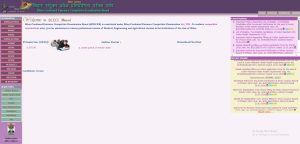
How To Download DECE LE Exam Syllabus 2026?

  • वेबसाइट के होमपेज पर पहुंचने के बाद “Examinations” सेक्शन पर क्लिक करें।
  • अब यहां आपको “DECE (LE) – Diploma Entrance Competitive Examination (Lateral Entry)” का विकल्प दिखाई देगा, जिस पर क्लिक करें।
  • इसके बाद DECE LE से संबंधित पेज खुल जाएगा, जहां आपको “Syllabus for DECE (LE) – 2026” या संबंधित नोटिफिकेशन का लिंक मिलेगा।
  • उस लिंक पर क्लिक करते ही आपके सामने DECE LE Syllabus 2026 PDF खुल जाएगा।
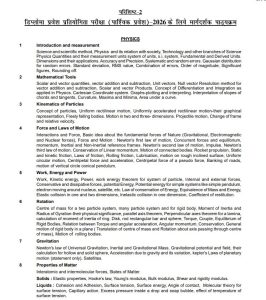
Bihar DECE LE Syllabus 2026 PDF Download

  • अब आप Download बटन पर क्लिक करके इस PDF को अपने मोबाइल या कंप्यूटर में सेव कर सकते हैं।
  • डाउनलोड करने के बाद आप चाहें तो इसका प्रिंट आउट निकालकर सिलेबस के अनुसार अपनी तैयारी शुरू कर सकते हैं।

इस प्रकार आप ऊपर बताए गए स्टेप्स को फॉलो करके आसानी से Bihar DECE LE Exam Syllabus 2026 PDF डाउनलोड कर सकते हैं और अपनी तैयारी को सही दिशा में आगे बढ़ा सकते हैं।

Conclusion

आज के इस आर्टिकल में हमने आप सभी अभ्यर्थियों को DECE LE Exam Pattern and Syllabus 2026 से संबंधित सभी महत्वपूर्ण जानकारी को सरल, सही और विस्तारपूर्वक बताने का प्रयास किया है। इस लेख में हमने परीक्षा पैटर्न और विस्तृत सिलेबस से जुड़ी सभी जरूरी जानकारियां साझा की हैं, ताकि अभ्यर्थी अपनी तैयारी को सही दिशा में आगे बढ़ा सकें।

Bihar DECE LE 2026 उन छात्रों के लिए एक महत्वपूर्ण अवसर है, जो 12वीं (Science) या ITI के बाद डिप्लोमा इंजीनियरिंग के दूसरे वर्ष में लेटरल एंट्री के माध्यम से प्रवेश लेना चाहते हैं। ऐसे में परीक्षा का पैटर्न और पूरा सिलेबस पहले से समझ लेना बहुत जरूरी हो जाता है, ताकि तैयारी व्यवस्थित तरीके से की जा सके और अच्छे अंक प्राप्त किए जा सकें।

यदि आप इस प्रवेश परीक्षा में शामिल होने जा रहे हैं, तो सलाह दी जाती है कि आप Official Syllabus और Exam Pattern को ध्यानपूर्वक पढ़ें और उसी के अनुसार अपनी पढ़ाई की योजना बनाएं। इस प्रवेश परीक्षा से संबधित अधिक जानकारी के लिए आप BCECEB के आधिकारिक वेबसाईट विज़िट कर सकते है।

यदि आपको यह आर्टिकल उपयोगी लगा हो, तो इसे अपने दोस्तों और अन्य अभ्यर्थियों के साथ जरूर शेयर करें, ताकि उन्हें भी DECE LE Exam Syllabus 2026 की सही और सटीक जानकारी मिल सके। अगर इस लेख से संबंधित आपके मन में कोई सवाल है, तो आप नीचे कमेंट बॉक्स में पूछ सकते हैं।

Important Links

DECE LE Syllabus 2026 Download Syllabus PDF
Official Notification Download Notification
Prospectus (2026) DECE [LE]
Official Website BCECEB Portal
Our Telegram Channel Join Telegram
Our Homepage BiharHelp

FAQs’ – DECE Lateral Entry 2026

Bihar DECE LE क्या है और यह परीक्षा किस लिए आयोजित की जाती है?

Bihar DECE LE एक राज्य स्तरीय प्रवेश परीक्षा है, जिसे BCECEB द्वारा आयोजित किया जाता है। इस परीक्षा के माध्यम से अभ्यर्थियों को डिप्लोमा इंजीनियरिंग के दूसरे वर्ष (Lateral Entry) में प्रवेश दिया जाता है। यह उन छात्रों के लिए महत्वपूर्ण अवसर है जिन्होंने 12वीं (Science) या ITI किया है और सीधे सेकंड ईयर में एडमिशन लेना चाहते हैं।

Bihar DECE LE 2026 परीक्षा में कौन-कौन से विषय शामिल होते हैं?

इस परीक्षा में मुख्य रूप से तीन विषय शामिल होते हैं – Physics, Chemistry और Mathematics। सभी प्रश्न इन्हीं विषयों के 10+2 स्तर के सिलेबस से पूछे जाते हैं। इसलिए अभ्यर्थियों को PCM विषयों की मजबूत तैयारी करनी आवश्यक होती है।

Bihar DECE LE 2026 का Exam Pattern क्या है?

इस परीक्षा में कुल 150 बहुविकल्पीय प्रश्न (MCQ) पूछे जाते हैं, जिनका कुल अंक 600 होता है। परीक्षा की अवधि 2 घंटे 15 मिनट होती है और यह OMR आधारित ऑफलाइन मोड में आयोजित की जाती है। प्रत्येक सही उत्तर के लिए +4 अंक और गलत उत्तर के लिए -1 अंक की नेगेटिव मार्किंग होती है।

Bihar DECE LE 2026 का सिलेबस किस स्तर का होता है?

इस परीक्षा का सिलेबस 10+2 (Science) स्तर पर आधारित होता है। इसमें Physics, Chemistry और Mathematics के वे सभी टॉपिक्स शामिल होते हैं जो इंटरमीडिएट स्तर पर पढ़ाए जाते हैं। इसलिए NCERT आधारित तैयारी काफी उपयोगी साबित होती है।

Bihar DECE LE 2026 के लिए आवेदन कब से शुरू होता है?

Bihar DECE LE 2026 के लिए ऑनलाइन आवेदन प्रक्रिया 20 मार्च 2026 से शुरू की गई है। इच्छुक अभ्यर्थी निर्धारित अंतिम तिथि तक आधिकारिक वेबसाइट के माध्यम से आवेदन कर सकते हैं।

Bihar DECE LE 2026 की परीक्षा तिथि क्या है?

इस प्रवेश परीक्षा का आयोजन 24 मई 2026 को किया जाएगा। अभ्यर्थियों को परीक्षा से पहले अपना एडमिट कार्ड डाउनलोड करना अनिवार्य होगा।

Bihar DECE LE Syllabus 2026 PDF कैसे डाउनलोड करें?

सिलेबस डाउनलोड करने के लिए BCECEB की आधिकारिक वेबसाइट पर जाकर “Examinations” सेक्शन में DECE (LE) लिंक पर क्लिक करें। वहां “Syllabus for DECE (LE) – 2026” का विकल्प मिलेगा, जिस पर क्लिक करके PDF डाउनलोड किया जा सकता है। यह सिलेबस तैयारी के लिए सबसे विश्वसनीय स्रोत होता है।

Bihar DECE LE 2026 में कितने प्रश्न किस विषय से पूछे जाते हैं?

इस परीक्षा में Physics, Chemistry और Mathematics तीनों विषयों से 50-50 प्रश्न पूछे जाते हैं। इस प्रकार कुल 150 प्रश्न होते हैं और प्रत्येक विषय 200 अंक का होता है।

Bihar DECE LE 2026 में नेगेटिव मार्किंग होती है या नहीं?

हाँ, इस परीक्षा में नेगेटिव मार्किंग होती है। प्रत्येक गलत उत्तर पर 1 अंक काट लिया जाता है, जबकि सही उत्तर पर 4 अंक दिए जाते हैं। इसलिए प्रश्नों को ध्यानपूर्वक हल करना जरूरी होता है।

Bihar DECE LE 2026 के लिए कौन-कौन आवेदन कर सकता है?

वे अभ्यर्थी जिन्होंने 12वीं (Science) या 10वीं के बाद 2 वर्षीय ITI कोर्स पूरा किया है, वे इस परीक्षा के लिए आवेदन कर सकते हैं। यह परीक्षा विशेष रूप से लेटरल एंट्री के लिए आयोजित की जाती है।

Bihar DECE LE 2026 में परीक्षा का माध्यम क्या होता है?

इस परीक्षा का प्रश्नपत्र द्विभाषी होता है, जिसमें हिंदी और अंग्रेजी दोनों भाषाओं में प्रश्न दिए जाते हैं। इससे अभ्यर्थियों को अपनी सुविधा अनुसार भाषा चुनने में आसानी होती है।

Bihar DECE LE 2026 की तैयारी कैसे करें?

तैयारी के लिए सबसे पहले पूरा सिलेबस समझें और फिर NCERT आधारित पढ़ाई करें। नियमित अभ्यास, मॉक टेस्ट और रिवीजन से आपकी तैयारी मजबूत हो सकती है। समय प्रबंधन और सही रणनीति सफलता की कुंजी होती है।

Bihar DECE LE Physics सिलेबस में कौन-कौन से मुख्य टॉपिक्स हैं?

Physics में Mechanics, Thermodynamics, Optics, Electricity, Magnetism, Modern Physics जैसे महत्वपूर्ण टॉपिक्स शामिल होते हैं। यह भाग concept आधारित होता है और इसमें numerical प्रश्न भी आते हैं।

Bihar DECE LE Chemistry सिलेबस किन भागों में विभाजित है?

Chemistry को तीन भागों में विभाजित किया गया है – Physical Chemistry, Inorganic Chemistry और Organic Chemistry। इसमें theory के साथ-साथ numerical और reaction आधारित प्रश्न पूछे जाते हैं।

Bihar DECE LE Mathematics सिलेबस में क्या शामिल है?

Mathematics में Algebra, Trigonometry, Calculus, Coordinate Geometry, Probability जैसे टॉपिक्स शामिल होते हैं। यह विषय सबसे ज्यादा scoring माना जाता है, इसलिए इसकी अच्छी तैयारी जरूरी है।

Bihar DECE LE 2026 का एडमिट कार्ड कब जारी होगा?

Bihar DECE LE 2026 का एडमिट कार्ड मई 2026 में परीक्षा से कुछ दिन पहले जारी किया जाएगा। अभ्यर्थी इसे आधिकारिक वेबसाइट से डाउनलोड कर सकते हैं।

Bihar DECE LE 2026 में अच्छे अंक लाने के लिए क्या करें?

अच्छे अंक प्राप्त करने के लिए नियमित पढ़ाई, revision और mock test बेहद जरूरी हैं। साथ ही, आसान प्रश्न पहले हल करें और नेगेटिव मार्किंग से बचने के लिए सोच-समझकर उत्तर दें।

Bihar DECE LE 2026 का रिजल्ट कब जारी होगा?

इस परीक्षा का रिजल्ट आमतौर पर जून 2026 में जारी होने की संभावना है। रिजल्ट के आधार पर काउंसलिंग प्रक्रिया शुरू की जाएगी।

Bihar DECE LE 2026 में काउंसलिंग कैसे होती है?

रिजल्ट जारी होने के बाद मेरिट के आधार पर ऑनलाइन काउंसलिंग आयोजित की जाती है। इसमें अभ्यर्थियों को अपनी रैंक के अनुसार कॉलेज और ब्रांच का चयन करना होता है।

Bihar DECE LE 2026 का आधिकारिक वेबसाइट कौन सा है?

इस परीक्षा से संबंधित सभी जानकारी के लिए आधिकारिक वेबसाइट bceceboard.bihar.gov.in है। अभ्यर्थियों को सभी अपडेट और नोटिफिकेशन के लिए इसी वेबसाइट को नियमित रूप से चेक करना चाहिए।

BiharHelp App

आपके उज्जवल भविष्य के लिए महत्वपूर्ण जानकारी यहाँ उपलब्ध है - सरकारी नौकरियाँ, परीक्षा परिणाम, प्रवेश पत्र और शैक्षिक अवसर। नवीनतम अपडेट और आवश्यक सूचनाओं के लिए BiharHelp ऐप डाउनलोड करें - आपकी सफलता का साथी।

⬇️ Download Bihar Help Mobile App📱
Jobs & शिक्षा से जुड़ी सभी जानकारी ! (यहाँ Click करें 👆)

The Author

Ankit Aman

Ankit Aman is a Professional Blogger who does Web Blogging and shares his thoughts, information, and experiences on the Website. He Blogs his writings on various topics to educate and entertain the masses. @iankitaman

Leave a Reply

Your email address will not be published. Required fields are marked *